
Deliverability 101 – Part 4
9 June, 2026

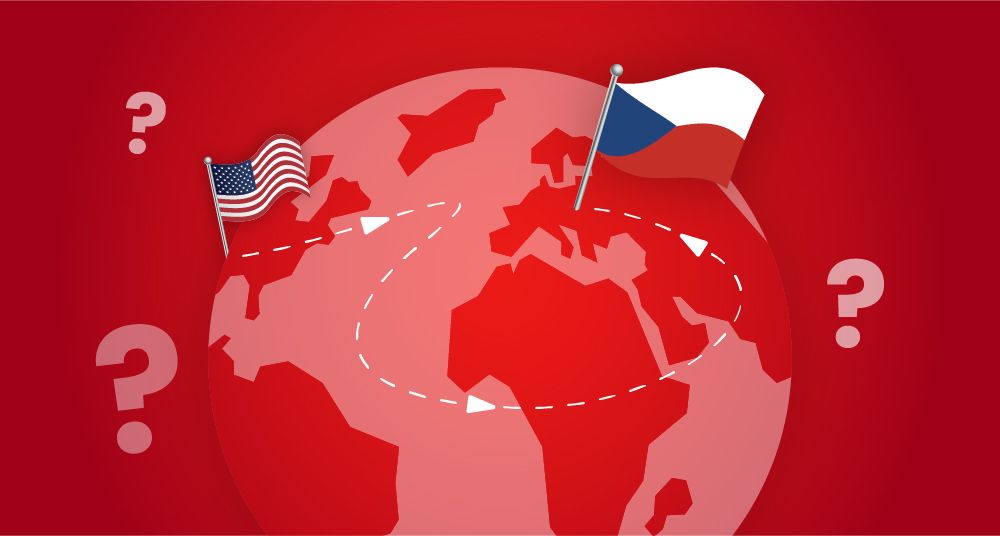
November 29, approximately one week ago, was the 2 year anniversary of my first 10-day solo trip to the Czech Republic. It was a trip that answered the question “Could I live here?”
For those who do not already know me: about 1.5-2 years ago, I immigrated to the Czech Republic. Before that move, I spent years researching multiple potential countries to call my new home, weighing the pros and cons of each using a checklist of qualifiers that are important to me, and learning bits of each language in preparation for a big move.
During that fateful trip, I spent my time wandering around the city using the first-class public transportation system, eating a variety of good food, getting lost in cobblestoned alleyways, practicing my Czech, and starting conversations with strangers (a couple of whom are still my friends). And of course, during my time there, I interviewed with my current employer before we decided that we were both interested, and that I should attempt the move.
For the next 5 months, I applied for an Employee card, packed up my belongings, repaired and sold my house, carefully bundled up my kitties in their little carriers, and flew across an ocean for what I hoped would not be a mistake (spoiler: it wasn’t). Now that I’m a mere 4.5 months shy of my 2 year moving anniversary, there are a lot of differences I’ve observed between my two countries. This post will focus mostly on the ones that impact my professional sphere - specifically the differences in the work culture between my former job Mailchimp and my current job Mailkit - with an emphasis on what I like to call “good friction.”
In early 2015, I started working at Mailchimp. At first my role was in the Support sphere, but at the time, Mailchimp’s internal growth was burgeoning and it wasn’t long before I climbed the ladder to more technical positions within Support, before finally (and fortunately) landing on the Delivery team 3.5 years later.
To this day I can’t believe how lucky I was. The highly coveted Delivery team is full of some of the most industrious, patient, kind, and humble people you’ll ever meet. I’ve lost track of how many times my teammates were willing to let me shadow them, or ask them questions about infrastructure, authentication, tool building, or anything else that I wanted to learn. Thanks to them, my opportunities for development were only limited by my own ability to remember everything that was thrown at me. It was a team of roughly 16 people, and I miss them dearly. Thankfully, we’ve remained friends and I get to see many of them at least once a year.
By contrast, there were anywhere from 16-20 employees I ever interacted with when I first started at Mailkit, and nearly all of them are either Czech or Slovakian. Much of the reason for the size difference between the two companies is because in 2021, Mailchimp went from being privately held, to being publicly traded when it was acquired by Intuit. This move changed many things, including the number of employees they were able to employ. In contrast, Mailkit is privately owned and has been since its inception in 2005, and I can’t imagine us changing that any time soon. I would also argue that the CEO Jakub Olexa prefers to keep leaner, more efficient teams - typical Capricorn.
Because the company is much leaner, that means the Mailkit Delivery team is as well. At the moment, it is literally just me and of course Jakub, who is the only other deliverability subject matter expert that I can lean on for advice. Rarely before have I worked this closely with the C-suite, and I have to say, it is quite a different experience. Due to his role, Jakub is pulled in many different directions and he doesn’t have the bandwidth to give me the same attention I had at Mailchimp. So while I learned so many skills at Mailchimp, Mailkit is helping me put those skills to the test and trust myself to make autonomous decisions more than I ever did before.
While the company might feel small now in comparison, we are actually one of the leading ESPs in the Czech Republic. Right now, email marketing is a booming industry in the Czech Republic, largely driven by a growing e-commerce sector, so it’s actually exciting to be a part of it at this point in time. It sometimes puts me in mind of how the early days of Mailchimp felt.
But have I been able to make the same connections here that I did at Mailchimp? Mind you, those connections developed over many years, and I’ve only been in my new role for about a year and a half. While there was at first a bit of a language barrier, I am pleased to say that many teammates have significantly improved their English, and I have likewise improved my Czech. The language exchange is one of the fun parts of the job, though it can be challenging. Even despite the language barrier and my newness on the team, we’ve formed professional friendships and I look forward to seeing their faces on a regular basis.
There are a few areas where Mailchimp and Mailkit strongly differ, and this is one of them. Mailkit has strict rules for who can make an account, and there is no free tier like there is with Mailchimp and many other Email Service Providers (ESPs). If anyone can make an account and immediately start sending, that unfortunately opens up the door for a lot of abuse. Much of my job at Mailchimp involved monitoring sending habits, finding bad senders, often stopping their sending, and then reporting them to our Compliance team to close the account. At Mailkit, I almost never have to do that, because a bad sender should not be allowed on our platform to begin with.
In addition to our various automated processes, every new Mailkit and Omnivery (Mailkit’s sister company) account and sending domain is human-reviewed (I am the human), and if there are any questions about the vetting results, we reach out to ask follow ups. We aren’t afraid to turn down an applicant if we see too many red flags, and we don’t bend over backwards to ensure they can pass our vetting - that’s their job. Volume thresholds for warming up a new sending domain or subdomain are set and enforced. DNS records are mandatory for each domain prior to sending anything over our infrastructure. And of course, I still monitor trends and consult our clients when they are tip-toeing outside of our recommendations.
It might sound like there are too many obstacles to even creating an account - won’t we lose out on clients?! It’s possible we might miss out on acquiring some new clients, but we don’t tend to lose quality accounts, who will not drag down our reputation. This is what I refer to often in my personal life as “good friction.” The principle is straightforward: in short, make it harder to do the things that aren't good for you. In this case, we set our standards high so irresponsible senders lose interest and go elsewhere. Responsible senders are more than welcome, and in return they are rewarded with excellent deliverability.
As you might expect, Mailkit takes a lot of pride in our sparkling reputation and intrinsically motivated adherence to best practices. For me, this was one of the biggest draws of joining the company. After years of proudly telling people I worked at Mailchimp, only to hear “oh, so you’re the reason I have so much spam”, it was quite disheartening - especially since the Delivery, Compliance, and Abuse Prevention teams work their butts off to prevent abuse from being sent out. Unfortunately, fighting for a fully empowered abuse desk can feel like you are swimming against the stream or fighting the hydra. However in the end, it pays to follow best practice, even without the carrot motivating you.
A perfect example of this is the sharp distinction between how Mailchimp and Mailkit dealt with the Yahoogle changes that began in October 2023. During that month, Yahoo and Google announced new requirements for bulk senders (anyone sending more than 5k emails/day). The trickiest part of these changes was having every bulk sender set up the proper authentication records, which had previously not been mandatory at most ESPs.
This sent many, many ESPs scrambling, stressing about how to help their clients set up correctly formatted DNS records before the deadline a few months later. Engineering teams across companies created systems to catch poorly formatted records and return error codes, and many ultimately partnered with third party services to automate the process as much as possible for clients. This of course involved legal and partnerships teams as well. Communications teams handled the customer-facing language about changes. Integrations were built and the bare minimum was met by enough of their clients that it was no longer a catastrophe. Mailchimp was one such company who had to jump through many of these hoops. I was working at Mailchimp during this time, and from what I saw, it was a truly impressive feat of cross functional cooperation, where hours and hours of work went into meeting a short and high-stakes deadline.
However, this happened because of a man-made problem resulting from not enforcing best practices in the first place, before they were required for sending to Gmail, Yahoo, and Microsoft. All those costs could have been proactively spread out over years, rather than reactively, and over a period of 4 months. That little bit of good friction from the beginning could have been a real time saver later on. Case in point: when these new requirements were announced, Mailkit sat back and relaxed - by that time, it had been at least 5 years that DNS records were mandatory for any sender using either Mailkit or Omnivery.
Speaking of relaxing, I can confirm that there is a massive difference between the EU and US work-life culture. This manifests in many ways: come 5p in the Czech Republic, the office starts emptying out and we all head home. When we have doctor's visits, we can just go and not worry about taking a half day or offsetting our hours for the day by working later in the evening. And much to my surprise, it is widely understood that Europe “takes a holiday” over the summer - so expect longer replies to your B2B emails.
Holiday time is also very different, although this isn’t new information. In the EU, workers are guaranteed 20 days of paid leave as a minimum, and many lucky individuals get more than that (my friend Mira calls me a PTO millionaire - thanks, Mailkit!). Last year, I was all but forced to take my holiday days off, especially since in the EU, (typically) none of your time off carries over like it does in the US. It really is a use-it-or-lose-it kind of deal. Only Americans are rewarded in this way for not using their vacation time.
To be fair, my former boss at Mailchimp also pushed our team to take our vacation time, because we were better for it. And he was right! Mailchimp has excellent benefits, and I felt like a PTO millionaire there too. By the time I left after 9 years of loyalty, I had easily 30 days off a year. But in general, this is the exception, not the rule. Mailchimp was the first job where I ever had these kinds of benefits, and I worked a lot before I started working there. It’s unfortunate that Americans are not guaranteed vacation days on a federal level like EU workers are. Approximately a quarter of all American workers don’t get any PTO, and anywhere from a quarter to 46% of workers who do don’t use all of their PTO (depending on the resource you reference). And don’t get me started on parental leave in the EU vs in the US. We should take the lead from the French and start rioting. That said, Mailchimp is again the exception here, with a generous parental leave for both parents, along with fertility assistance and adoption support.
Just for fun, I’ll bring up one thing America does do right - if an American holiday falls on a weekend, we still get the holiday the previous Friday or the following Monday (“in lieu of” holidays). Believe it or not, that is not how it works in Europe! You just kiss those holidays goodbye (tragically, three Czech holidays fell on a weekend this year). But at least we have our time off to make up for it.
In fact, I don’t ever hear Europeans talk about having a work/life balance, because they consider it a given. You won’t catch them foregoing their holiday time off. And it’s not because they are lazy - they just aren’t obsessed with their jobs in the same way Americans are (these are generalizations, and I acknowledge there are exceptions from both sides).
I attribute much of this mentality to the social safety nets I mentioned above, and the common sense labor laws that I did not realize existed before I moved here.
As an example, I hail from the state of Georgia, which is an at-will state (like many, many states in the US). For those who are unfamiliar with this term, it means that an employer can terminate an employee at any time for any reason, or no reason at all, as long as the reason is not illegal. And yes, I am not kidding (I can’t believe I just accepted this in the past).
Over a year ago, when I was nearing the end of my probationary period for my new role at Mailkit/Omnivery and anxious about my future at the company, I remember a conversation with my boss after confirming that I would be an official member of the team. During the conversation, he informed me that it is actually quite difficult to fire an official employee in the Czech Republic. In order to do so:
The thing to know about these laws is that they are not unique to the Czech Republic. You will see similar laws all throughout the EU. As an American, this completely shifted my world view. It is hard to fully express the peace of mind I now have knowing that I cannot be fired because my boss is having a bad day, or fired and then without a job or salary the very next day. And to be clear, I do not use these protections as an excuse to underperform. If anything, the gratitude I feel for these protections makes me work hard so I don’t ever have to work in America ever again. I work hard because I care about contributing to the company, not because I’m afraid to be without a salary, healthcare, or stability (again, don’t get me started on the lack of universal healthcare in America).
From conversations I’ve had with both Americans and Europeans, I’ve heard concerns that these labor laws make it hard to fire genuinely underperforming employees. While that’s a valid concern, and of course any system - no matter how thoughtfully designed - can be abused, I would argue that not having these laws leads to exploitation of the workforce, which is worse. After all, it’s not impossible to fire underperformers - it’s just a bit more difficult. Again, good friction. It also should mean that employees are hired more thoughtfully and only fired for valid reasons.
The Czech Republic checks all the boxes I had before moving here, and now after over 1.5 years of living here, it is checking boxes I had not even considered. People always say “nowhere is perfect”, and that is true, but I’ve never been happier anywhere in the world. As much fun as it is to travel, I always long to return to my favorite country.
Mailchimp was an entire era of my life, and I am so grateful for the skills I was able to learn, the opportunities it gave me, the friends I made, and the life experiences that helped me become a more empathetic and resourceful person. Mailkit is a new chapter and while this article is largely flattering to my new company and country, we will see if I have more constructive criticism with time. My new colleagues are wonderful, and I’ve already formed bonds with many people at Mailkit and Omnivery. Even after just a year and a half on the team, I can tell I’m developing in a completely different way than I did at Mailchimp, and that in itself is exciting.
And if you enjoyed this article and would like to hear more from the perspective of someone who has lived and worked in both the US and EU, please let me know! I’m happy to elaborate on more personal reasons in future posts.
Let us know what your campaign objectives are and we'll create a plan that works for you.
Processing of information provided using this form is governed by our Privacy Policy.

A Czech emailing platform with its own infrastructure, that is a leader in international mailing distribution.


